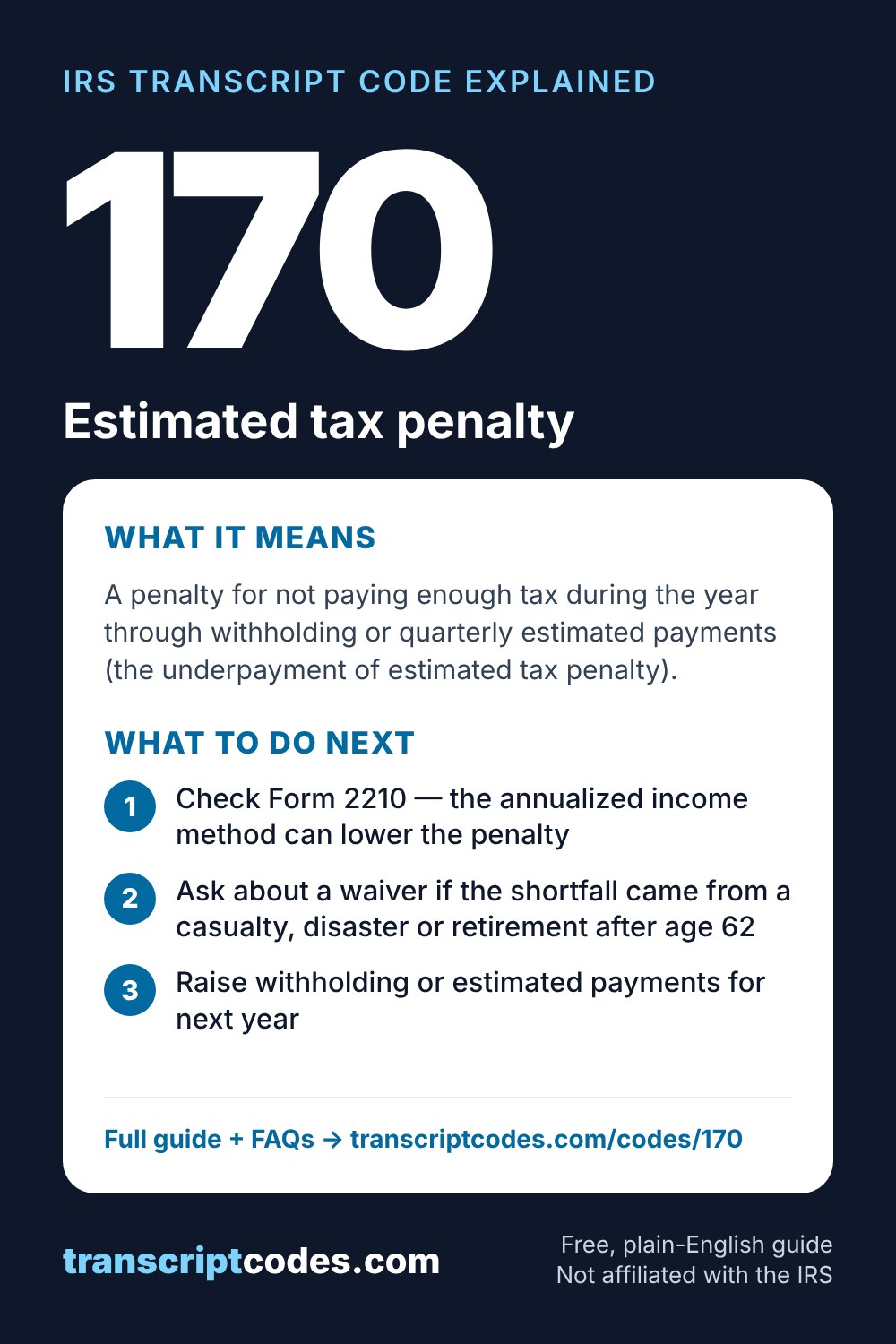
IRS code 170: Estimated tax penalty
Why you got this
- Withholding plus estimated payments were less than the safe-harbor amount
- A large payment was made only when you filed
- Income was uneven during the year (self-employment, capital gains)
What happens next
What you should do
- Check Form 2210 — the annualized income method can lower the penalty
- Ask about a waiver if the shortfall came from a casualty, disaster or retirement after age 62
- Raise withholding or estimated payments for next year
Frequently asked questions
What does IRS code 170 mean?
A penalty for not paying enough tax during the year through withholding or quarterly estimated payments (the underpayment of estimated tax penalty). It can come from Form 2210 on your return or be figured by the IRS.
Why did I get IRS code 170?
Common reasons: Withholding plus estimated payments were less than the safe-harbor amount; A large payment was made only when you filed; Income was uneven during the year (self-employment, capital gains).
What should I do?
Check Form 2210 — the annualized income method can lower the penalty Ask about a waiver if the shortfall came from a casualty, disaster or retirement after age 62 Raise withholding or estimated payments for next year
How long does it take?
It posts with the return (often next to code 150). A CP30 notice may explain an IRS-computed penalty.
Sources
- IRS: Understanding your IRS notice or letter
- IRS: Get Transcript
- Taxpayer Advocate Service (independent help inside the IRS)
Written by the editorial team and checked against the official sources above. See our editorial policy.
By the TranscriptCodes Editorial Team · Last reviewed 2026-11-12.